

Greetings, designers! Vertical signage is a category of signs that are fixed in a vertical position on road signs, transmitting messages to drivers through permanent or variable symbols or legends.
To ensure the effectiveness of the signaling vertical, it is necessary that it follows principles such as legality, standardization, clarity, precision and reliability, visibility and legibility, maintenance and conservation.
Vertical signage is classified according to its function. Below, we will better understand the three existing types and their main differences.
Regulatory vertical signage
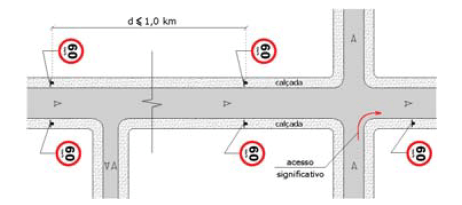
Regulatory vertical signs are intended to convey to users the conditions, prohibitions, obligations or restrictions on the use of urban and rural roads. The standard shape is circular and the colors are red, black and white. Signs R-1 “Mandatory Stop” and R-2 “Give Way” are exceptions regarding the shape.
Vertical Warning Signage
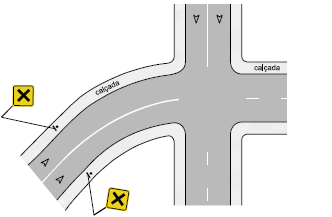
Vertical warning signs are intended to alert users to potentially dangerous conditions, obstacles or restrictions on the road. They should be used whenever the danger is not obvious by itself. The standard shape is square, with one of the diagonals vertical, and the colors are yellow and black. Signs A-26a, A-26b and A-41 are exceptions regarding the shape.
Vertical indication signage
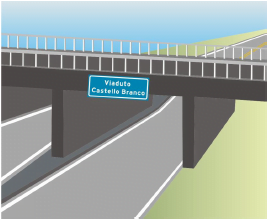
Vertical signage is communication through a set of signs that identifies roads and places of interest, guides drivers and pedestrians regarding routes, destinations, access, distances, auxiliary services and tourist attractions, and may also have the function of educating the user. Vertical signage is divided into identification signs, destination guidance signs, educational signs, auxiliary services signs, tourist attractions and inspection posts.
To the dimensions of the indication plates must be calculated based on the speed limit on the road, the type of sign, the number of pieces of information and the largest caption contained therein, as well as the other elements that make them up. It is the category with the greatest scope and, therefore, its colors appear in four different combinations, according to the type of indication it makes.
Vertical indication signs are divided into the following groups:
- Nameplates
- Destination guidance signs
- Educational signs
- Auxiliary service boards
- Tourist attraction signs
- Checkpoint signs
The dimensions of the signs must be calculated based on the speed limit on the road, the type of sign, the number of pieces of information and the largest caption contained therein, as well as the other elements that make them up.
It is the category with the greatest scope and, therefore, its colors appear in 4 different combinations, according to the type of indication it makes:
– Black and white: identification of highways and educational signs.
– Brown and white: guidance on tourist attractions.
– Blue and white: general identification (streets, avenues, bridges, municipalities, etc.), kilometer markings, guidance of destinations and distances for roads and highways, services (gas stations, hotels, etc.), pedestrian guidance (location of safety lanes, for example).
– Green and white: distances and destinations.
It is important to consult the signage manuals for the correct development of the vertical signage project, which aims to provide information that allows road users to adopt behaviorshttps://seabrasolucoes.com.br/manual-de-sinalizacao-contran/
Taking all this into consideration, we have created this content, bringing together the main vertical signage manuals so that you can download them and consult them whenever necessary. If you find any missing, send them to us at suporte@seabrasolucoes.com.br
Download all vertical signage manuals in PDF format now to develop your signage projects.
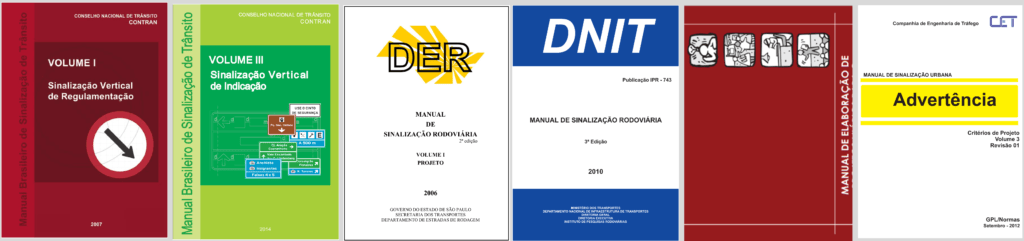
When downloading you will receive the vertical signage manual from CONTRAN, DNIT, DER, BHTRANS, CET.
Frequently Asked Questions – Vertical Signage
What is vertical signage?
Vertical signage consists of signs installed vertically along roads, with the aim of conveying visual messages (symbols or text) that guide, regulate, or inform road users.
What are the fundamental principles of vertical signage?
To be effective, vertical signage must follow the following principles:
- Legality
- Standardization
- Clarity and precision
- Reliability
- Visibility and readability
- Maintenance and conservation
What types of vertical signage exist?
Vertical signage is divided into three main categories:
- Regulation – Defines rules, prohibitions, or restrictions (e.g., "Stop," "Give Way").
- Warning – Warning about dangerous conditions or obstacles.
- Indication – Provides information on destinations, services, locations, distances, and various directions.
What colors and shapes are used in vertical signage?
- Regulation: usually circular, in the colors red, white and black.
- Warning: diamond shape (diagonal upwards), in yellow and black colors.
- Indication: various formats, with color combinations such as:
- Black and white (educational and highway identification)
- Brown and white (tourist attractions)
- Blue and white (general guidelines and services)
- Green and white (destinations and distances)
How are the dimensions of vertical signage plates defined?
The dimensions vary according to the speed of the road, the amount of information to be displayed, the type of sign, and the largest legend present. Correct calculation ensures adequate visibility and legibility.
What are the groups of vertical signage for informational purposes?
It is divided into:
- Nameplates
- Destination guidance signs
- Educational signs
- Auxiliary service boards
- Tourist attraction signs
- Checkpoint signs
Is there an official manual to consult regarding vertical signage standards?
Yes! You can consult the official manuals on the CONTRAN website. Seabra Soluções has also compiled the main manuals in one place to make your work easier:
👉 Vertical Signage Manual – Download here
Didn't find what you were looking for? Be sure to check out our other content on signaling manuals:

